
Dynamic receipt merging for restaurant teams: Designing SpaceM from scratch
SpaceM is a restaurant POS that pioneered dynamic receipt merging in Georgia.
Key Impact Metrics
13 Seconds
Average multi-dish order processing time
2-3x faster than typical restaurant POS workflows
Market-first Feature
2.3k
Flexible payments
Role
Timeline
Team

The Challenge
Restaurant managers were losing revenue to operational inefficiency.
Back in 2021, processing a multi-dish order on a traditional POS took 25–45 seconds per table. That adds up fast during a busy dinner service.
Table management was even more painful. When groups split or merged, staff had to close the bill, open a new one, and re-enter everything from scratch. Every time. Meanwhile, actual customers were waiting.
Most systems on the market were also desktop-bound — built for a fixed counter, not a dining room that changes every hour.
Opportunity
Restaurants needed a simple system
Software that will help them split bills into payment methods, visitors amount and give servers ability to merge bills.
Discovery & Research
We visited multiple restaurants to understand where time was being lost.
Through observation, we documented the complete service workflow from table seating to payment. We spent time next to cash desk, watched servers during peak hours and interviewed restaurant managers about their operational pain points.

Device clutter
Waiter and operators were using additional devices, calculators to split or merge the the bill. Which increased operation time.

Sticky notes everywhere
Every POS terminal was surrounded by sticky notes for order details. A workaround that slowed service and created errors when notes were lost or misread.

Receipt design
Receipts cluttered with symbols (#, *, item codes) and repeated information confused customers during bill splits, requiring server intervention to decode each item.
Findings
Staff needed mobile access, not desktop system
Servers took orders at the table during peak hours and then entered them into the POS system at a terminal.
Findings
Managers struggled with text-based table
Managers needed instant table status, but text-only lists made them mentally recreate the floor plan.
Findings
Table splitting and merging required manual work
When groups combined tables or split bills, staff had to manually reconstruct orders into new receipts.
Key Insights
"Restaurant staff don't need more features.
They need speed and flexibility when it matters most."
This insight gave foundation to our approach.
Instead of adding functionality to existing POS paradigms, we reimagined the entire ordering experience around two principles: instant action and adaptive workflows.
We realised that every second saved on order entry translated directly to better customer service. And every flexible workflow we enabled meant staff could focus on hospitality instead of fighting their tools.
The Solution
POS that adapts to restaurant reality, not the other way around.
We surface currency details and promoted primary actions to home screen
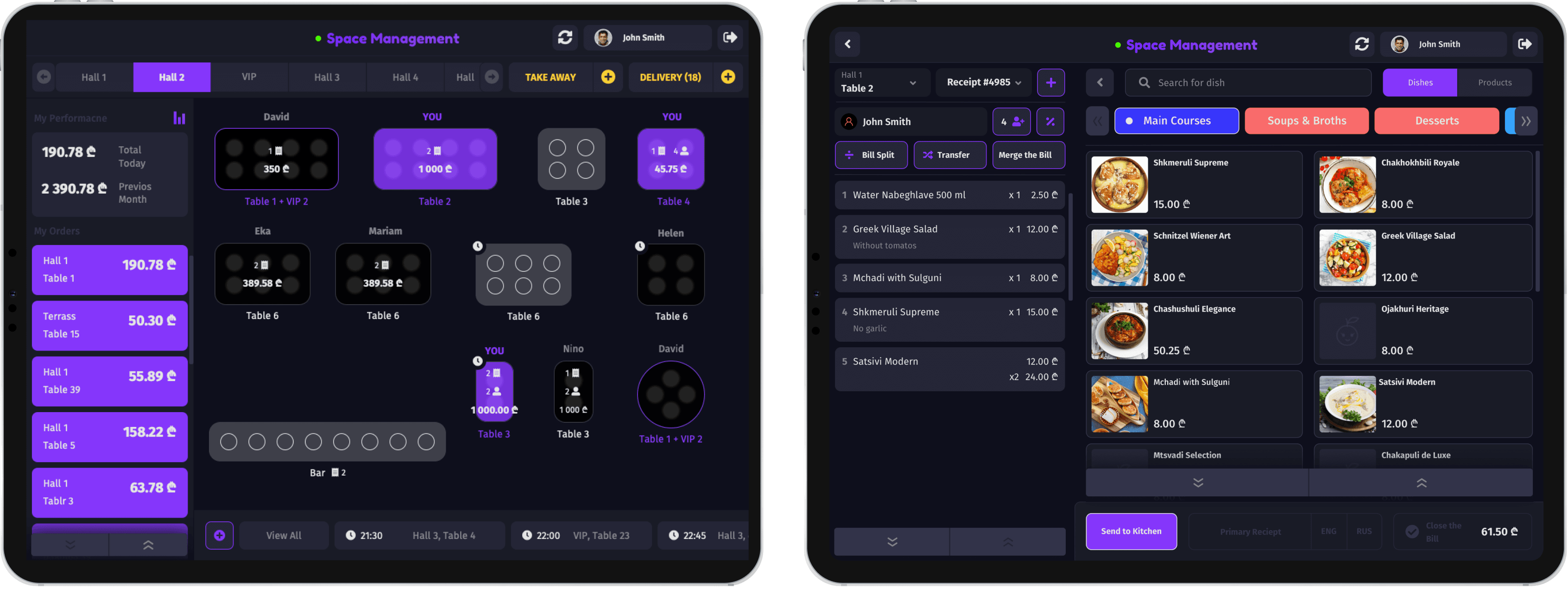
We built SpaceM around three things that mattered most to restaurant staff:
Seeing the floor plan at a glance, placing orders as fast as sending a message, and splitting or merging bills without friction — something no other POS on the market could do at the time.
Everything in the interface was designed for speed. Smart defaults, familiar patterns, and enough flexibility to handle any table setup or payment scenario that comes up during a busy shift.
Design Decision
Visual Table Management
An interactive floor plan that surfaces real-time table status at a glance
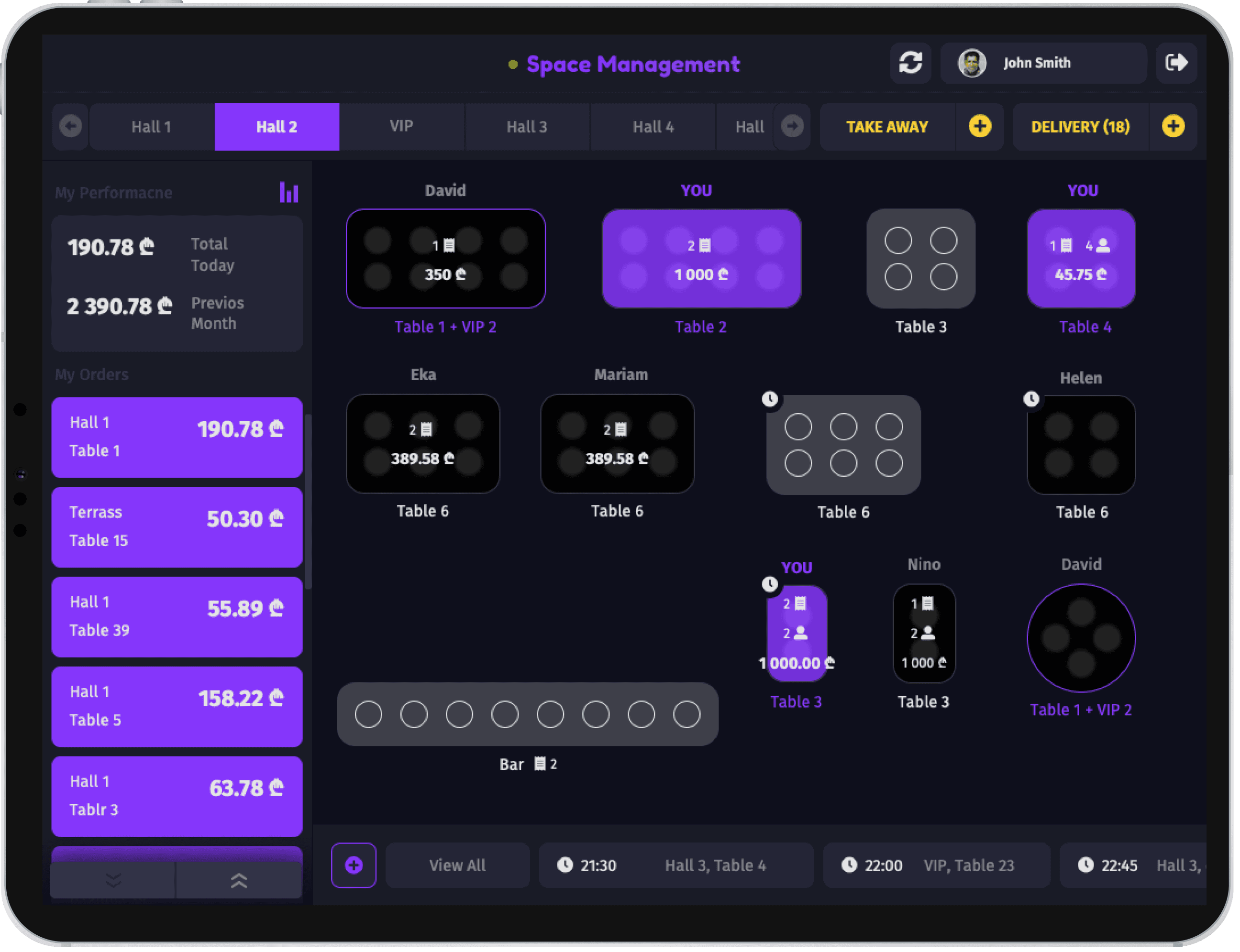
Design Decision
Dynamic Receipt Management
Drag & drop items between receipts, merge entire tables with one tap, or split bills
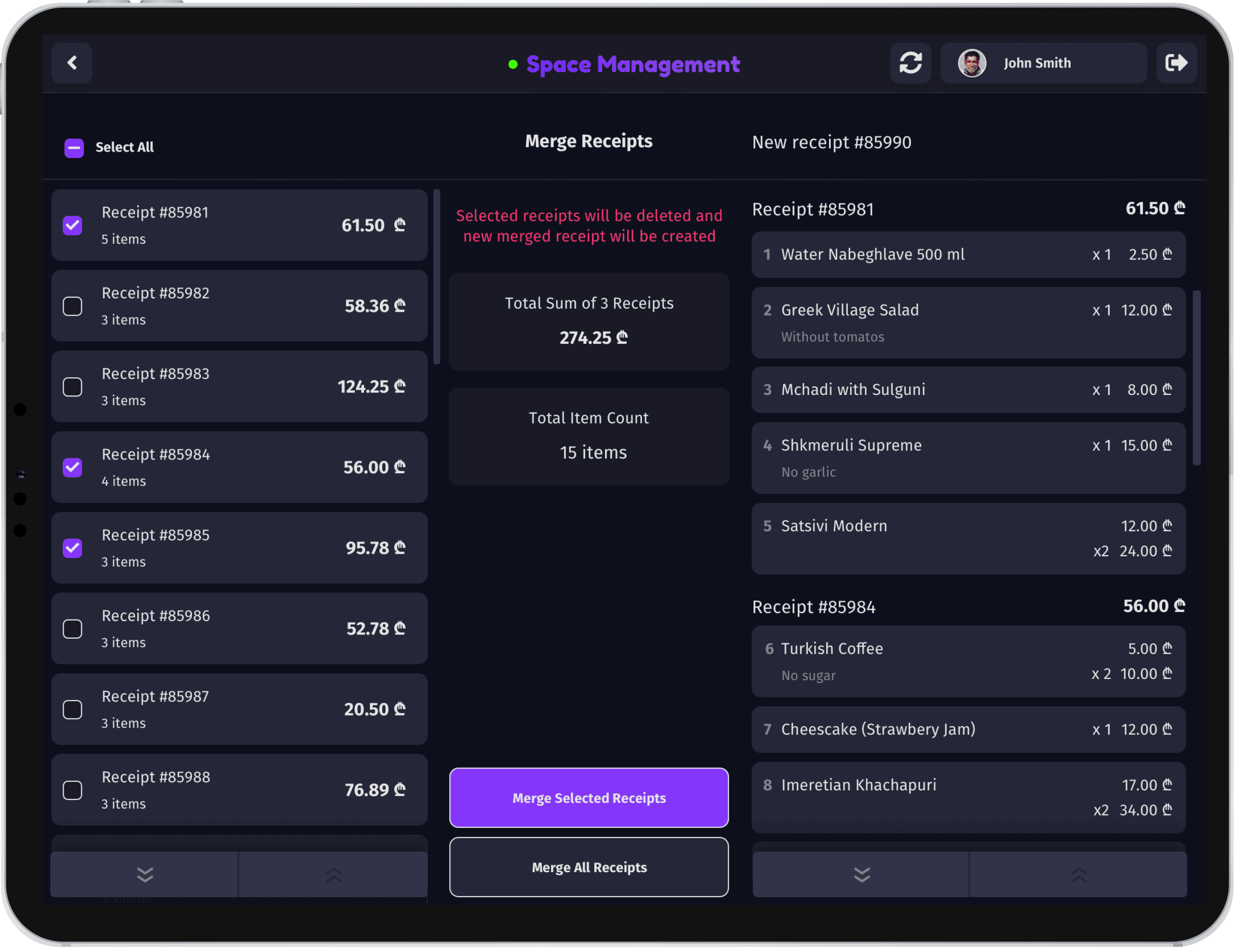
Impact
Used 4,359 times in 2025 alone
Outcome
Launched in 2021, SpaceM has become one of Georgia's leading restaurant management platform.
The platform started with 2 restaurants. Four years later it was running in 103, processing millions in daily transactions — $32M+ USD equivalent in total.
That's 283x growth. Not just in numbers, but proof that the product actually worked — for small cafés and high-volume restaurants alike.
Impact
₾117 Million
Total revenue processed across 1.5 million receipts in 103 restaurants
11.8 Million Dishes
Tracked through the system since launch
Recognition
NVIDIA Inception Program member
SpaceM was selected for NVIDIA Inception Program (2024) and started developing AI-powered quality control features (TasteAI)

Four years later, the design decisions hold
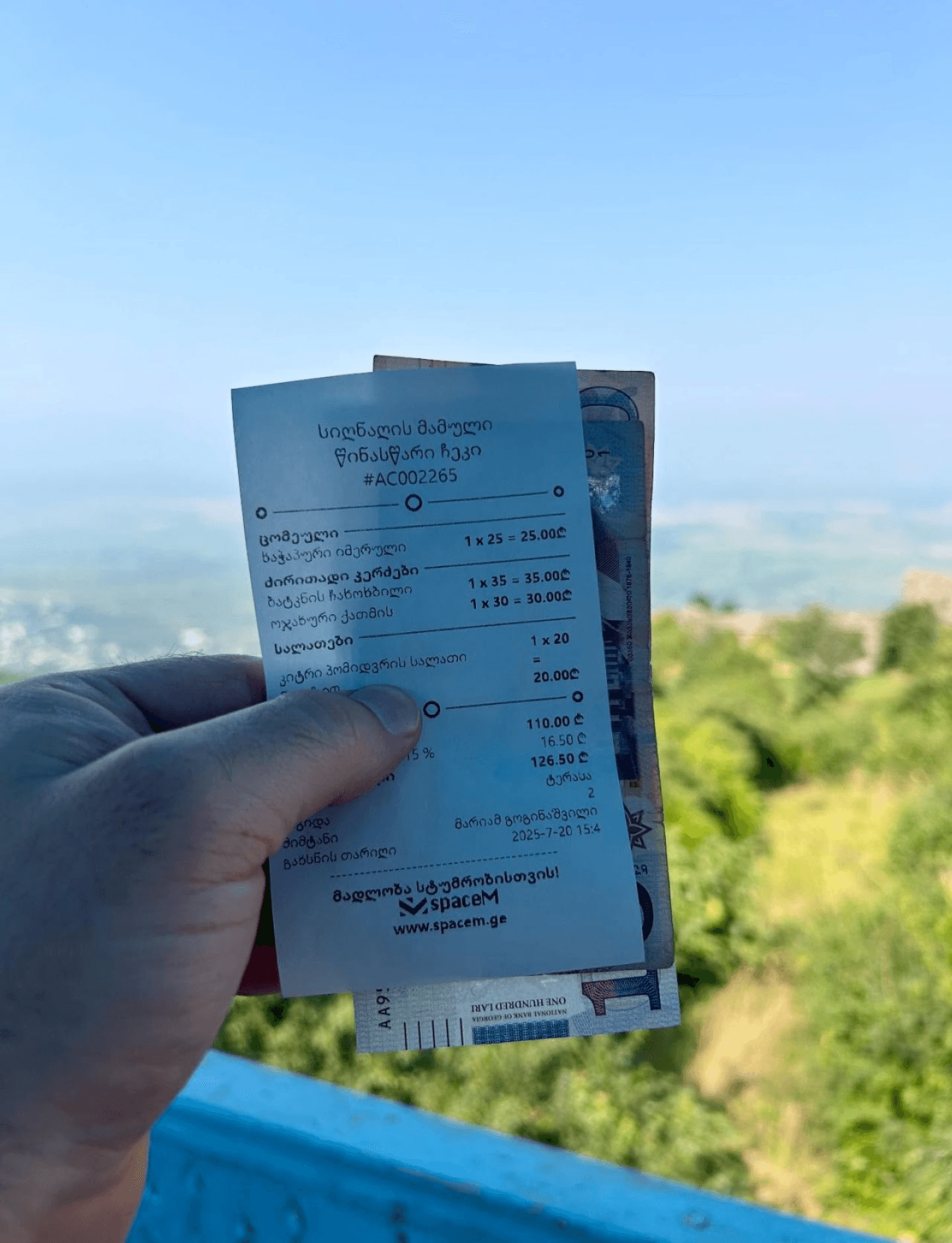
Four years later, I was in a small tourist café in Sighnaghi when I recognised something — the receipt design. One I had made for SpaceM.
I went straight to the staff and asked what they thought of the software. Whether it actually works for them, or just gets in the way.
That conversation stayed with me.
SpaceM was a full restaurant management system — ingredients, inventory, orders, delivery, bill splitting, table merging. Building the POS for it was one of the more interesting design challenges I've worked on.
There's something special and satisfying about finding your work in the wild, years later, still running, still solving real problems.
103 restaurants use it daily.
That means something.

We built SpaceM around three things that mattered most to restaurant staff: